
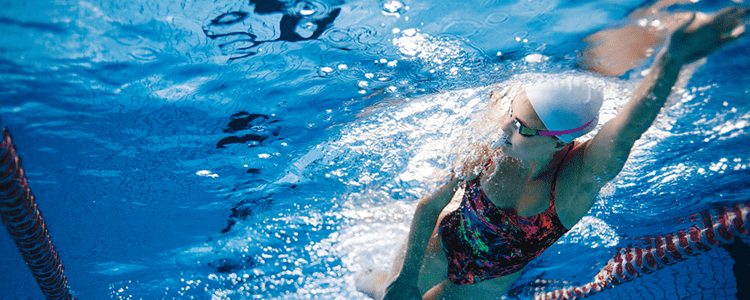
Health Benefits Of Water Aerobics
Do you currently maintain an ongoing exercise regimen, but have recently lost your enthusiasm to continue the activity that you are involved with? Maybe your commitment to this exercise has created physical issues due to repeated impact or repetitive movements?
Or maybe, you have not been exercising on a regular basis, or have avoided the benefits of physical activity completely due to concerns about pain.
If any of these scenarios apply to you, or if you are simply interested in attempting something new, then water aerobics presents a large number of benefits that you should consider.
Benefits Of Water Aerobics
First, it is important to supply this reminder to any of you who are not currently exercising on a regular basis. It is essential that you find some activity in which you can remain active. The risks of prolonged sitting were examined here and they include the unwanted conditions of heart damage, stroke, high blood pressure, diabetes and high cholesterol. Failing to remain physically active on a routine basis also increases the chances of experiencing obesity. It also raises the risk of anxiety issues along with the likelihood of discomfort in your back.
Finding a physical activity that you can remain involved with consistently is also critical in reducing the risk of blood clots (DVT) emerging in your legs. The danger of DVTs is serious, as any movement of clots into your lungs or heart can be fatal.
Choosing to remain involved in an exercise that occurs in the water can reduce the risk of these issues. It will also provide multiple benefits of low impact. This is advantageous because it allows you to avoid pressure on your joints, bones and muscles. Water also provides natural resistance which will boost the strength of your muscles.
Why Water Exercise Is Effective
Water exercise will supply the additional advantages of increasing your endurance, improving your circulation, allowing you to rehabilitate any problematic muscles and reducing your stress level. Plus, you can become involved with water aerobics even if you do not already know how to swim.
This is accomplished because your presence in the water eliminates gravity to the point that your normal body weight is reduced by 90%. Yet, the water will also supply 12%-14% more resistance than you will encounter from the air. All of which essentially allows you to have the equivalent of carrying weights that surround your body, without significant impact or stress.
Water aerobics provides the added benefit of lowering your blood pressure, along with your LDL cholesterol – which is referred to as your bad cholesterol. It will also raise your HDL (good cholesterol). But aerobics can also be beneficial for anyone who is dealing with arthritis and can help individuals who experience problems with their knees.
According to Harvard Health Publications, an adult will burn 120-178 calories in 30 minutes of water aerobics, depending on body weight. The more you weigh, the more calories you will burn. This occurs because your body weighs less in water, and you don’t have to expend as much energy.
If you are an older adult, this is an outstanding option toward remaining physically active. Exercising in the water will also bolster your strength and increase your stamina without placing stress on your joints. If other forms of exercise have caused pain in the past, then water-based exercise could provide a pathway toward improved well-being. However, it is best to have a conversation with your physician if you have encountered issues with physical activity in the past.
The Centers for Disease Control and Prevention (CDC) has stated that water-based exercise will be beneficial for individuals with chronic diseases. This is also the case for anyone who deals with arthritis. Exercising in the water can also improve your mental health, regardless of your age.
What Happens In A Water Aerobics Class
It is reasonable to expect that your water aerobics class will take place for approximately one hour. During that span, you will be located in the shallow area of a pool.
The exercises that you will be involved with should include various movements with your legs. This could also include forms of walking, lifting, shuffling and light forms of jumping. There could also be exercises that involve kicking through the use of a kickboard.
These exercises that you complete will boost your heart rate. But as a reminder – there should be no concern that your body will encounter the same level of impact that would occur with workouts outside of the water.
Your arms will also be used during class for activities such as curls, and a percentage of movements will utilize both your arms and legs. After each class has been completed, you will have taken advantage of the physical and mental benefits that water aerobics can deliver.
The S.W.E.A.T. Method
Water aerobics are an increasingly popular method of exercise as more people see that they are an often more effective and safer alternative to the machines at your local gym. In December of 2013, J Sports Sci Med. published a study on the benefits of water aerobics that broke down their now widespread S.W.E.A.T. method. In this article, we’ll further break down that method, and explain some of the health benefits of water aerobics. Of course, the general advice provided here is a good guideline, but it is always recommended that you consult with an orthopedic professional before deciding whether water aerobics are the best choice for you.
It would be nearly impossible to list all of the health benefits of water aerobics. Water aerobics are so fundamentally different from more traditional methods of exercise that explaining those differences would require a breakdown of the core philosophy of exercise. In the interest of brevity, we’ll start from the origin point of all these benefits: the S.W.E.A.T. method.
As written by Mary E. Sanders, the S.W.E.A.T. method is as follows:
S = Changes in Surface area and Speed.
W = Changes in impact by using the Working positions of rebound (jumping), neutral (chest submerged, feet touch lightly), suspended (buoyant work performed without feet touching bottom) and extended (standing tall, feet grounded on the bottom).
E = Enlarge the movement (extending to fuller range of motion).
A = Work Around the body or joint by changing planes (sagittal, transverse and multiplanar).
T = Traveling through water forward, backwards and on diagonal.
These five variables can be changed to provide the best possible workout while putting less stress on the body, specifically the joints. The S.W.E.A.T. method can be applied to workouts one would do outside of the water to add resistance and decrease the amount of wear on one particular part of the body.
Changes in surface area and speed are used primarily to control how much resistance the exerciser is being met with, as well as how much work they are doing. For water aerobics this is especially important because this will help get the heart working.
Changes in impact and working positions allow workouts to become more intense and to be spread out. In the example provided by the aforementioned study, the W of the S.W.E.A.T. method is used to get participants working several different areas of the body.
Changes in the size of movement (the E in S.W.E.A.T.) also increase resistance, making the body parts work harder. Again, this is used to control the intensity of the workout and to keep participants’ hearts working.
Working around the body engages different muscle groups, providing a bit of rest to the participants in the provided example. This avoids fatigue in any particular body part, while not allowing the participants’ heart to rest. This piece is crucial to increasing cardiovascular endurance.
Finally, traveling through the water allows the body to transition smoothly into rest. The example exercise in the study notes that, during the travel period, participants were also instructed (randomly) to freeze, or stand on one leg, which helped improve balance.
The abstract for the study notes its success:
“Assessments for participants included ADL functional field tests. In comparison to the C group, WEX participants improved (p < 0.05) flexibility (8%), sit- to-stand (31%), walking speed (16%) and stride length (10%), agility (20%), stair climb (22%), arm curl (39%), and static (42-48%) balance, but not dynamic balance. Results indicate that the S.W.E.A.T.™ method applied to this water exercise program provides a well-rounded, safe, and effective exercise program where older women can improve functional ADL and static balance.”
The Benefits
With an understanding of the S.W.E.A.T. Method, we can boil down the health benefits of water aerobics into three major areas: pain and fatigue, cardiovascular fitness and ADL.
Because the natural resistance provided by water, the buoyancy, is different than on air, the effects of gravity on your workout is lessened. While the changes this makes may not be readily apparent, they do add up. The biggest change can be seen in intense workouts, like jumping. The resistance provided will cause less stress to the joints in your knees, providing a more pleasant experience. This also comes into play in smaller ways, like during arm curls. Where a traditional arm curl puts all of the weight on the bicep, the same workout spreads the stress to the tricep in the water. In this way, water aerobics help to avoid muscle and joint pain during and after exercise.
Water aerobics are also great for your heart. The increased resistance and interval training helps to provide a pleasant but incredibly effective cardio workout. It’s common knowledge that swimming is an excellent cardio exercise, so it should come as no surprise that water aerobics are as well.
ADL improvements are the primary benefit of water aerobics, however. Nowhere outside of the pool will you find exercises that are so effective in improving daily life while putting the exerciser at such little risk. This combination makes water aerobics the perfect choice for most people between 35 and 65.
The decreased fatigue and effectiveness of water aerobics provide a workout experience like no other. Of course, being in cool water doesn’t hurt during the summer months, either. If you’re looking for a pleasant and potent workout, water aerobics might be for you but, again, talk to an orthopedic professional if you have any concerns about getting in the water.
At OrthoTexas, We Are Here To Help
At OrthoTexas, we want you to enjoy your daily activities. That includes involvement with any type of sports or recreational activity that you prefer. If you encounter discomfort, illness, injury, or have a concern about anything that might keep you from being involved in physical activity, we are here to assist you, so that you can return to pain-free participation in the activities and lifestyle that you enjoy.
Your path to recovery starts here. Schedule an appointment with OrthoTexas or find a location near you.