
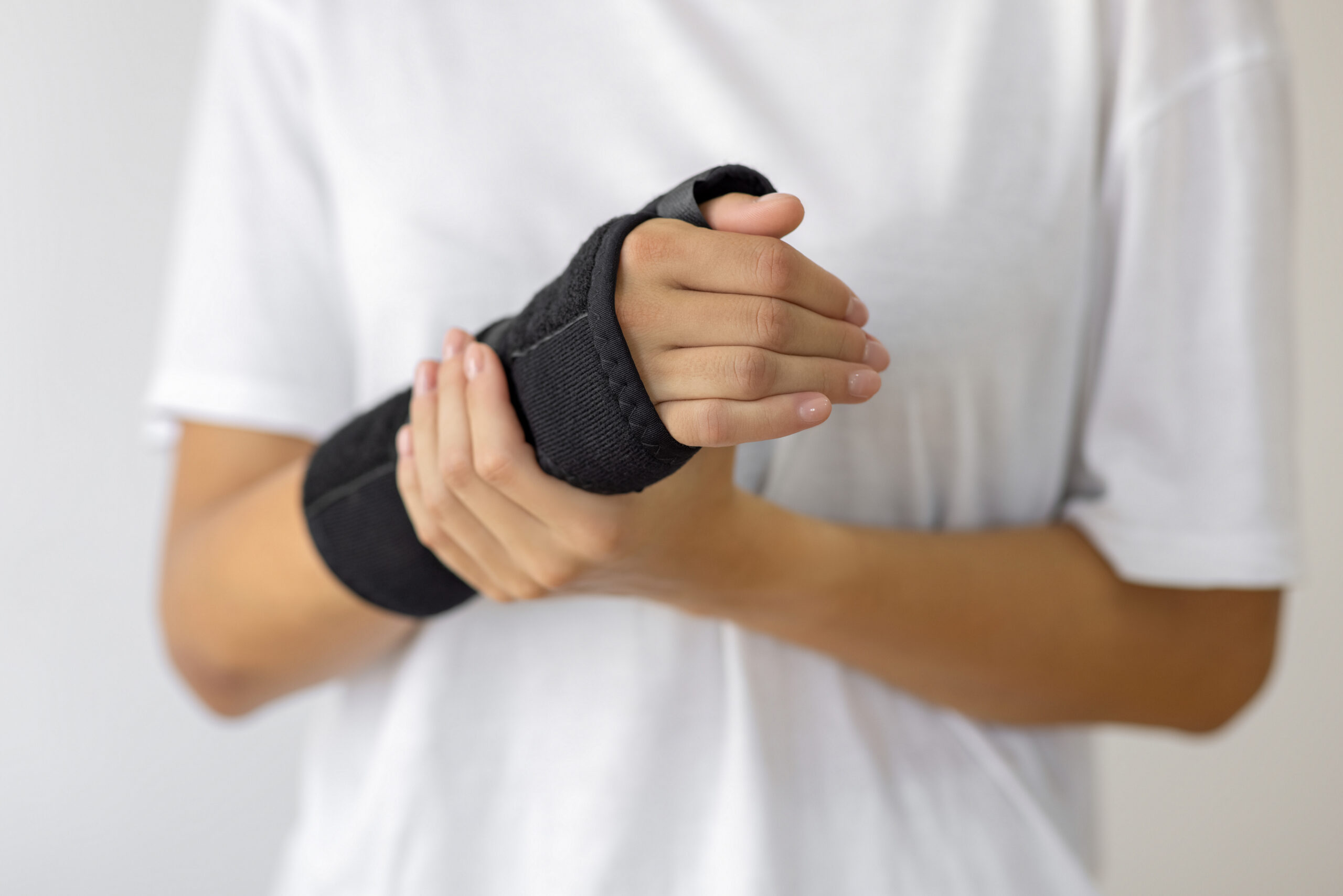
While the function and structure of the wrist is one of the most complex in the body, the purpose of our wrists is to be able to support a wide range of movement. The wrist is made up of many joints, bones, ligaments and tendons, that work together for the wrist to be able to move side to side, forward and backward, up and down, rotate and bend.
The wrist is also known as the carpus, and is made up of about eight smaller wrist bones. It is a complex formation of joints that connects to the ulna and radius of the forearm as well as the five metacarpal bones of the phalanges. Sometimes, physicians may have to surgically intervene in this complex structure with minimally invasive options such as wrist arthroscopy.
The wrist serves as a transfer of force from the arm to the hand. Without the wrist, our hands would neither be flexible nor strong. These details are made possible through the convergence of bones, joints, tendons, ligaments, nerves and blood vessels.
Your Guide to Wrist Anatomy
Wrist and Hand Bones
Carpus Hand and Wrist Bones
The eight bones that make up carpus are each called the trapezium, trapezoid, capitate, hamate, pisiform, triquetrum, lunate and the scaphoid. The most commonly injured carpal bone is the scaphoid bone, located near the base of your thumb. The unique cluster of small bones in different shapes and sizes is what gives the wrist its strength and flexibility. If you look at your hand while you move your fingers and wrist, you’ll notice how pliable your hand and wrist is. If your hand were made up of three or four larger bones, your hand and wrist would not work the same.
Forearm Wrist Bones
The two long bones in the forearm running from the elbow to the wrist are your ulna and your radius. The ulna does not directly form a joint with the wrist bones, whereas the radius does. The end of the ulna bone, closest to the littlest finger, is covered by a piece of cartilage that acts as a cushion between the wrist and the forearm bones. The radius bone, closest to the thumb, meets with the lunate and the scaphoid bones directly, which are considered part of the proximal carpals. The row of carpal bones closest to the forearm is known as proximal carpals while the row of carpal bones closer to the fingers are known as distal carpals.
Wrist and Hand Bones
The distal carpals meet with the hand bones, or the metacarpal bones, and form five joints that make up our fingers. Metacarpals are the long bones connected to the distal carpals, which forms the fingers and thumb. Constant use and movement of these bones may cause issues such as arthritis or even carpal tunnel syndrome. According to our fellowship-trained hand and wrist surgeon, Dr. Cameron Atkinson, “carpal tunnel syndrome is the most common problem any hand surgeon sees.” Although carpal tunnel syndrome is a common occurrence over time, there are several treatment options that can help.
Joints and Motions of the Wrist
While there are a few joints inside the wrist, and these joints vary in the type and each support separate motions. Wrist fractures commonly occur on the joint surfaces.
The radiocarpal joint is the largest and main joint in the wrist that is also known as a condyloid joint, which allows combined motions in multiple planes. The radiocarpal joint is located at the proximal carpals (where the forearm meets the wrist).
The distal radioulnar joint is located between the radius and the ulna and is one of two joints between the forearm bones. The other joint located between these two bones is called the proximal radioulnar joint, which allows forward and backward rotation of the wrist.
The ulnocarpal joint joins the ulna bone with the lunate and triquetrum bones inside the wrist. Because of the location of this joint, it is known to be a common wrist sprain area. This joint also serves as part of forearm rotation.
Most wrist fractures are the result of a break in the radius bone at the radiocarpal joint, known as a distal radius fracture.
Joints Located in Hand
While there are more joints connecting the distal, middle and proximal phalanges, let’s focus on the five joints between the distal carpals of the wrist and the metacarpals of the fingers. These five joints are known as the carpometacarpal joints and each serve separate purposes. The carpometacarpal joint of the thumb is a saddle joint, which permits the thumb to move forward, backward and side-to-side. The carpometacarpal joints of the other four fingers are gliding joints, which enables up and down and side-to-side movements. The synovium lines the joints and fills with a lubricating fluid called synovial fluid. Joints with synovium may form balloon like cysts called ganglion cysts that may require surgical removal.
Wrist Ligaments
The ligaments are durable bands of connective tissue that connect the bones and support them in order to keep them in place. The wrist consists of several ligaments that make up several functions of the hand and wrist.
The Ulnocarpal and radioulnar ligaments are two sets of ligaments that provide the main support for the wrist. The scapholunate interosseous ligament and the lunotriquetral interosseous ligament provide stability to the proximal carpal row. This ligament can be divided into three parts: a dorsal, a proximal and a volar ligament.
Volar and dorsal ligaments support each side of the wrist. Volar radiocarpal ligaments supports the palm side of the wrist while the dorsal radiocarpal ligaments supports the back of the wrist.
Radial and ulnar collateral ligaments are a pair of ligaments that work together to secure the bones of the wrist and provide stability. A torn UCL results in Tommy John Surgery.
Collateral ligaments are strong ligaments on either side of the finger and thumb joints. These ligaments prevent sideways movement of the joint to prevent injuries. Ligament injuries are called sprains. The ligaments and tendons inside the wrist play a vital part in our everyday activities and overuse can result in common forms of hand pain such as tendinitis or even fractures in extreme cases. The main tendons of the hand are:
Wrist Tendons
The motions of the hand and wrist are powered by tendons, which are cords of connective tissue (similar to that of a rope) that connect muscles to bones. The tendons that control movement in your hands and wrists, begin at the forearm and insert into the hand bones. No tendons insert into the carpal bones themselves.
There are superficialis tendons that pass through the palm side of the wrist and hand, and attach at the bases of the middle phalanges and there are profundus tendons that act similarly, but rather attach at the bases of the distal phalanges.
Extensor tendons attach to the middle and distal phalanges that work together to bend back the wrist as well as straighten the wrist. The tendons are known as extensor carpi radialis brevis (bend), extensor carpi radialis longus (bend) and extensor carpi ulnaris (straighten).
Flexor tendons are nine long tendons which pass from the forearm through the carpal tunnel of the wrist, allowing it to bend as well. They separate in the palm and attach to the fingers and thumb. These tendons are called the flexor carpi radialis (attached to the distal carpals of the second and third metacarpals) and the flexor carpi ulnaris (attaches to the pisiform and the fifth metacarpal).
Tendons link the muscles to provide force to the joints and bones, providing movement. Tendons and ligaments authorizes simple hand and wrist movements such as opening and closing your hand and bending your fingers. Wrist tendon injuries may involve damage to a tendon, possibly resulting in tendonitis. Outgrowths on the tendon sheath can fill with synovial fluid forming ganglion cysts.
Hand and Wrist Issues and Treatment Options
There are several types of hand and wrist issues that may arise. Injuries include carpal tunnel syndrome, arthritis, trigger finger, and a broken wrist, fingers, thumb or hand. These injuries can be complex and can cause difficulty with work and your day-to-day activities.
With many problems that can cause pain in the hand and wrist, as well as numbness and tingling, there are a variety of treatment options. Depending on the problem, from basal joint arthritis to traumatic injury, there are several options for treatment that may provide a solution.
Some noninvasive treatments can include physical therapy, oral medications and pain creams. Other treatments for more serious problems can include steroid injections, splinting/casting and surgical correction possibly including plates, screws and pins.
However, there are various ways to increase the strength of your hands and wrists through exercise to help prevent injuries.
Hand and Wrist Exercise
The strength and stability of the wrist do not just depend on the muscles that move the wrist but also the muscles that cross the wrist line and finish in the fingertips. Performing exercises that keep the wrist still while moving your fingers will develop good wrist stability and strength.
Hand and wrist exercises can strengthen the muscles around the joints as well for better support. The exercises can improve blood flow to your hands, warming the muscles and ligaments. They can also increase the circulation of synovial fluid, which lubricates and helps cushion the joints to keep them moving smoothly.
Hand and wrist exercises will also strengthen your wrists, keep your hands and fingers flexible and help lower the risk of injury.
Exercises to Try at Home
Exercises at home should be performed with minimal discomfort; however, you should feel effort during the process. After stopping exercise, you should feel that the areas you worked are a little tired, and this should disappear within 15 minutes of stopping the exercises. Over the period of several weeks of regular exercises you should notice a definite improvement in your functional ability. Lifting a small box, a skillet for cooking dinner or a rake for some yard work should feel easier.
If you are looking to improve or maintain strength in your wrists, a good exercise program is necessary. There are simple things you can do at home to improve or maintain strength.
Wrist exercises only require a few things:
- A small 2- to 5-pound weight (or a can of soup or water bottle).
- A table or ottoman for resting your forearm.
- A resistance band (as an alternative to weights).
Stretching exercises are recommended for prevention and to ease slight pain. Stretching your wrists can offer many wellness benefits.
Stretching will:
- Activate muscles, blood flow and stimulate your forearm and hand muscles.
- Increase your short-term range of motion.
- Increase long-term flexibility.
- Relieve muscle soreness.
When doing hand and wrist exercises you should monitor your pain levels, especially in the beginning. You may find that these exercises can increase your symptoms, so start at a reasonable pace. However, the exercises should get easier over time and with regular practice will help to improve movement.
Other Conditions Requiring Exercise
Wrist and hand exercises will greatly benefit you if you have chronic wrist pain due to injury, surgery, aging or arthritis.
The joints in the fingers, thumbs and wrists can become stiff and swollen from certain types of autoimmune arthritis, especially rheumatoid arthritis. Everyday tasks, such as opening car doors and brushing teeth, can become challenging and painful. Hand exercises will help stretch and strengthen muscles and tendons, relieve symptoms and improve hand function.
Sports that involve throwing and overhead motions can place athletes at risk for wrist injuries. If you are a weekend athlete or a professional player in a sport like baseball, tennis, golf or volleyball, then you may wish to incorporate wrist strengthening exercises in your injury prevention program.
Carpal tunnel syndrome is a condition that occurs due to pressure on the median nerve because of repetitive and long-term motion. Approximately 8 million people suffer from this condition. It can cause numbness in your fingertips, tingling sensation and weakness in the hand. Stretching is the best exercise to help with pain from carpal tunnel syndrome. This includes hand, finger and thumb stretching. Also, the “prayer” stretch where you press your palms together with resistance is helpful. Wrist rotations can benefit as well.
F.A.Q.
What Kinds of Bones Are in Hand and Wrist?
The carpal bones in the wrist, the metacarpal bones and the phalanges in hand are only a few of the bones that make up the hand and wrist. Other bones include the radius and ulna bones in the forearm.
Which Hand and Wrist Injuries Occur Most Frequently?
Fractures, sprains, strains, dislocations and tendon or ligament injuries to the hand and wrist are frequent injuries. Trauma, excessive use or chronic stress are some causes of these.
How Are Hand and Wrist Injuries Handled Medically?
Injury type and severity both affect how a hand or wrist is treated. Rest, ice, compression and elevation (RICE) can heal minor wounds, while physical therapy, appointment with an orthopedic surgeon in Dallas or immobilization in a cast or brace are options for more severe injuries.
Can I Strengthen My Hand and Wrist?
Yes. Simple hand exercises can help stretch and strengthen muscles and tendons, help relieve symptoms and improve hand function.
How Can I Strengthen My Hands and Wrists for Arthritis?
Hand exercises for arthritis include mobility, strengthening with equipment, a stress ball or putty, and functional training.
How Can I Strengthen My Hands and Wrists if I Have Carpal Tunnel?
Gently bend and stretch your wrists throughout the day. There are many stretch exercises that strengthen your arm muscles and relieve carpal tunnel syndrome.