
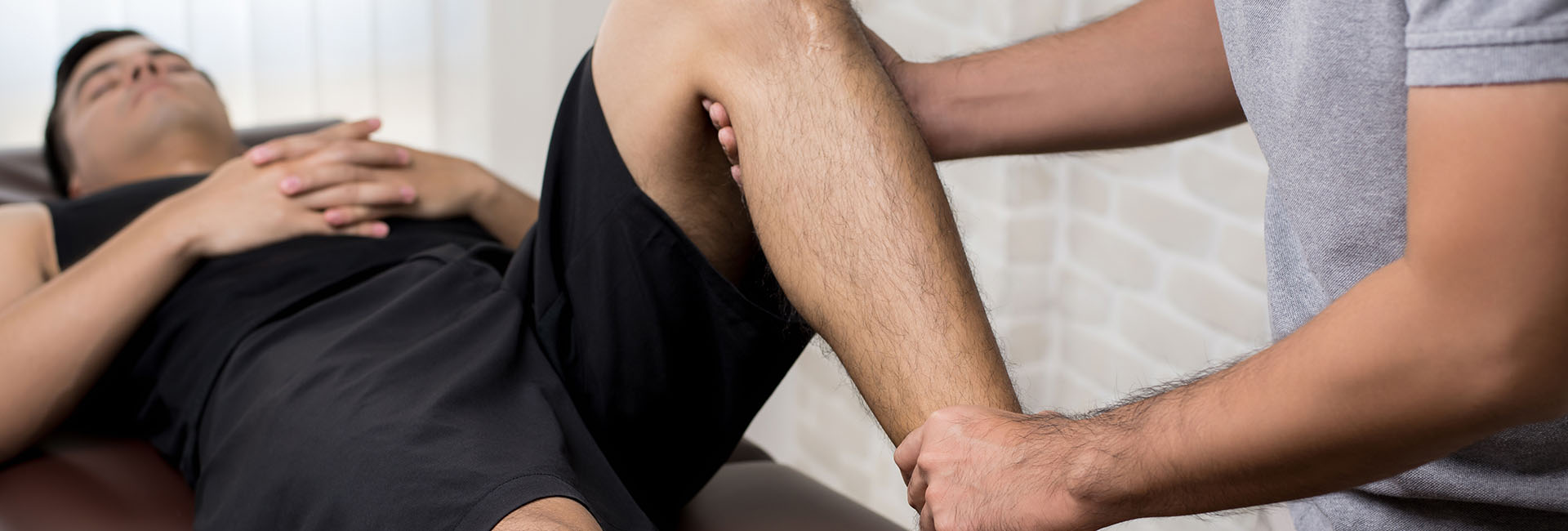
Prepatellar bursitis, or kneecap bursitis, is the filling of fluid in a bursa underneath the patella. The patella is the hard bone like shield that protects the knee joint, and the bursa is a formation of scar like tissue that offers padding to the junction between bones. The best way to describe a bursa is scar tissue that forms and acts as a lubricating sack of tissue that smooths out the movement internally. Bursitis happens when the bursa gets too much irritation and becomes inflamed which can lead to it filling with fluid. Activities that put people on their knees for large portions of time can contribute to a kneecap bursitis. Professionals like electricians, plumbers, construction workers, baggage handlers, all spend lots of time kneeling and can experience a kneecap bursitis from on-the-job overuse of the knee. When a kneecap becomes inflamed and fills with liquid the pressure will force a lump out onto the top of the kneecap. We call this inflammation, or possibly infection, bursitis.
Risk Factors for Kneecap (Prepatellar) Bursitis
Overuse Risk Factors of Kneecap Bursitis
Kneecap bursitis is often an overuse injury and it occurs in larger numbers among populations of workers that often kneel at work. Tradesmen, construction workers, miners, farmers and even hobby gardeners are at increased risk. Athletics is another risk factor due to constant use of the knee with the possibility of traumatic injury. Motor vehicle accidents are another cause, as well as inflammatory conditions such as rheumatoid arthritis and gout. The commonality of all these risk factors is activity that irritates the kneecap. If your knees are being overworked, they will ache and can become inflamed. If your knees are inflamed, then you are at increased risk of a prepatellar bursitis.
Other causes include:
- A direct blow to the front of the knee
- Direct fall on the knee in sports such as football and wrestling.
Infectious Risk Factors of Kneecap Bursitis
Anytime your skin is punctured or cut there is the possibility of bacteria making their way into your body. There are defense mechanisms to prevent this, but it is a possibility that even something as small as a pin prick or insect bite could get a bacterium past your body’s initial defenses and take hold inside of your body. If a bacterium reaches your bursa you can develop infectious bursitis. Kneecap bursitis of this nature is going to need medical help to resolve and will be diagnosed when fluid is removed from the bursa and it is visually examined for cloudiness and may be sent to a laboratory for additional testing. Cloudy fluid indicates a bacterial infection.
Symptoms of Kneecap (Prepatellar) Bursitis
Prepatellar bursitis can manifest itself with symptoms such as pain while using your knee to bear weight, but the pain may be less when you are non-weight bearing, such as lying in bed. The top front of your kneecap can rapidly swell and become tender and warm to the touch. If you have the infectious type of kneecap bursitis you may additionally have localized redness to the skin that can be accompanied with a fever and chills.
Symptoms may also include difficulty in straightening or flexing the knee.
Diagnosis
- The doctor may question the patient regarding the symptoms and severity of pain.
- Since kneecap bursitis caused by an infection requires an alternative treatment plan, the doctor may also ask questions pertaining to symptoms of infection.
- A thorough physical examination of the knee may be conducted to check for tenderness and range of motion.
- Imaging tests such as X-rays, CT scans and MRI scans may also be recommended by the doctor to assess the joint structure.
Treatment
Non-Surgical Treatment
- Rest: It is imperative to immediately get off activities that may worsen the pain. Light exercises such as cycling are ideal until the pain subsides.
- Ice packs: Application of ice packs several times a day may help in considerably reducing inflammation.
- Elevation: Raising the affected leg while lying on the bed may also aid in providing relief from swelling.
- Medication: Non-steroidal anti-inflammatory drugs (NSAIDs) may be prescribed by the doctor to reduce pain and discomfort.
- Corticosteroid medication: Depending on the condition of the patient, the doctor may sap the bursa with the help of a needle and inject it with corticosteroid medication. This brings down the swelling to a great extent.
Surgical Treatment: If the swelling persists, surgical removal of the bursa may be required to treat the condition. This helps in complete recovery of the patient from kneecap bursitis.
For treatment of kneecap bursitis, visit OrthoTexas.
Your path to recovery starts here. Schedule an appointment with OrthoTexas or find a location near you.